Showing posts with label Maths. Show all posts

Sunday, 8 July 2018

How George Dantzig's Late Arrival to Class Made Math History

In the math and science world, George Dantzig (1914–2005) is known as the Father of Linear Programming. But it's a time he was late for class that has made him an inspiration to millions around the world—even if they don't know him by name.

An Accidental Solution

After receiving his Bachelor of Science from University of Maryland in 1936, and a master's degree in mathematics at the University of Michigan, Dantzig went on to study for his PhD at University of California, Berkeley.

At the University of California, Dantzig was enrolled in statistics class taught by the renowned Polish statistician, Jerzy Neyman. One day in 1939, while Dantzig was running late for class, Neyman began his lesson by writing out two examples of "unsolvable problems" on the classroom blackboard. When Dantzig eventually did show up, he assumed they were part of his homework, and copied them in his notes. Although he found the problems more difficult than his usual assignments, he meticulously drafted out solutions for each one.

Days later he handed them in with an apology to Neymen for being late again—thinking the problems were overdue. Weeks later, Neymen excitedly told Dantzig that he had solved the unsolvable, and not only that, but Neymen had prepared one of the solutions for publication in a mathematical journal. (This part of the story would have undoubtedly gone a little differently if texting and email was available back then!).


The Tardiness Heard 'Round the World

Dantzig went on to lead a stunning career. During WWII, he took a break from his studies to serve in the U.S. Air Force, a move that eventually resulted in his next breakthrough: the development of linear programming, as well as the simplex algorithm needed to solve it. His methods became so widespread and influential that in 1975 he was awarded the National Medal of Science by then-President Gerald Ford, and he remains known as the Father of Linear Programming to this day.

As for the incident of the unsolved problems, that became a legend that spread far beyond the math world, circulating in classrooms and boardrooms for generations as an amazing lesson on the power of motivation and positive thinking. It may have even provided the basis for math-heavy storyline of the 1997 Matt Damon and Ben Affleck film, Good Will Hunting. So, the next time you find yourself running behind, don't get frustrated—just remember that every so often, lateness can lead to genius!

How about solving an 'unsolved' problem today?

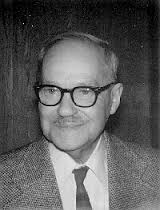
George Dantzig


Jerzy Neyman
References -
  1. Curiosity.com
  2. Obituaries of George Dantzig
Read more at the Science Pole App

Friday, 10 November 2017

Zero is older than we thought it was


Carbon dating finds Bakhshali manuscript contains oldest recorded origins of the symbol 'zero'

The origin of the symbol zero has long been one of the world's greatest mathematical mysteries. Today, new carbon dating research commissioned by the University of Oxford's Bodleian Libraries into the ancient Indian Bakhshali manuscript, held at the Bodleian, has revealed it to be hundreds of years older than initially thought, making it the world’s oldest recorded origin of the zero symbol that we use today.

The surprising results of the first ever radiocarbon dating conducted on the Bakhshali manuscript, a seminal mathematical text which contains hundreds of zeroes, reveal that it dates from as early as the 3rd or 4th century - approximately five centuries older than scholars previously believed. This means that the manuscript in fact predates a 9th-century inscription of zero on the wall of a temple in Gwalior, Madhya Pradesh, which was previously considered to be the oldest recorded example of a zero used as a placeholder in India. The findings are highly significant for the study of the early history of mathematics.


The zero symbol that we use today evolved from a dot that was used in ancient India and can be seen throughout the Bakhshali manuscript. The dot was originally used as a 'placeholder', meaning it was used to indicate orders of magnitude in a number system – for example, denoting 10s, 100s and 1000s.

While the use of zero as a placeholder was seen in several different ancient cultures, such as among the ancient Mayans and Babylonians, the symbol in the Bakhshali manuscript is particularly significant for two reasons. Firstly, it is this dot that evolved to have a hollow centre and became the symbol that we use as zero today. Secondly, it was only in India that this zero developed into a number in its own right, hence creating the concept and the number zero that we understand today - this happened in 628 AD, just a few centuries after the Bakhshali manuscript was produced, when the Indian astronomer and mathematician Brahmagupta wrote a text called Brahmasphutasiddhanta, which is the first document to discuss zero as a number.

Although the Bakhshali manuscript is widely acknowledged as the oldest Indian mathematical text, the exact age of the manuscript has long been the subject of academic debate. The most authoritative academic study on the manuscript, conducted by Japanese scholar Dr Hayashi Takao, asserted that it probably dated from between the 8th and the 12th century, based on factors such as the style of writing and the literary and mathematical content. The new carbon dating reveals that the reason why it was previously so difficult for scholars to pinpoint the Bakhshali manuscript’s date is because the manuscript, which consists of 70 fragile leaves of birch bark, is in fact composed of material from at least three different periods.


The Bakhshali manuscript was found in 1881, buried in a field in a village called Bakhshali, near Peshawar, in what is now a region of Pakistan. It was found by a local farmer and was acquired by the Indologist AFR Hoernle, who presented it to the Bodleian Library in 1902, where it has been kept since.


Friday, 13 May 2016

Friday 13th - friggatriskaidekaphobia

May 13th is a Friday and Friday the 13th is considered unlucky! The fear of Friday the 13th is known as friggatriskaidekaphobia.

Have you ever wondered how those are possible in a year? It is simple math..

Here is a table to show how the 13th of every month is distributed based on which day the year starts.
13th of every month - the year starts on Day 1
If a year starts on Day 1, the distribution of the 13th would be as above. There is a 13th in every column.. what does this mean? If the year starts with a Friday (i.e. Day 1 is a Friday), there will be only 1 Friday the 13th that year. There can't be a year without at least one "Friday the 13th".

The maximum number of "Friday the 13th" would occur on Day 2 which means that Day 1 should be a Thursday i.e. the year should be a Thursday.

For a leap year, the distribution would be slightly different and as follows
13th of every month in a leap year - the year starts on Day 1
In a leap year, the maximum number of "Friday the 13th" would occur on Day 6 which means that a leap year starting on Sunday would have 3 of them.

An interesting article is available on EarthSky.org


Sunday, 24 August 2014

Sharing Birthdays


I was introduced to this challenge as a high school student. It was one of the most exciting moments of my student life! So here's the challenge..

In a class of 40 students, what is the probability that 2 students share the same birthday?


Very less! Don't you think so? 40 students and 365 days in a year and their birthdays matching... very very remote. However, against our intuition the probability is as high as 0.89!


The calculation is really simple. The probability that the birthdays of 2 students matches is (the second student has one chance in 365)

Now the probability that the birthdays of the 2 students doesn't match is

The probability that a third student doesn't have the same birthday as the first 2 students is

The probability that the 3 students don't share the same birthday is

(the probability of the birthday of the second student doesn't match with the first student AND the probability of the birthday of the third student not matching with the first and second students – product of both probabilities).


On similar lines, the probability that no 2 students have the same birthday out of a class of 40 is


and hence, the probability that 2 students have the same birthday out of a class of 40 is the complementary


Thats how the 89% chance that 2 students of a class have the same birthday. Observe how the probability increases steeply. Note that the Y axis in the graph is a logarithmic scale.


Related reading - 'Math Chambers' by Alfred S Posamentier

Friday, 22 August 2014

The Game of Four 4s

Game of Four 4s
The very thought of the end of the first term examinations gave such a relief to Ram who was studying in 6th standard. He could now spend the next 3 weeks at home and enjoy cricket with his friends at the nearby ground. So much to do and all of it starts tomorrow, Ram thought.

He had informed all his friends to assemble at the ground at 6 am. He was just hoping that this grandmother doesn't stop him from playing in the sun. The next day Ram woke up and dashed off to the ground. This really surprised his mother. 'Normally it takes a good 15 minutes to wake him to go to school', she thought.

To his surprise, only 3 of his friends turned up. 4 was too small a number to play a game of cricket! They then decided to take turns to bat and bowl. But who would start first? Everyone wanted to bat first. This turned out to be a loud argument which attracted a retired teacher who was on his morning walk.

'What is the problem beta?', he inquired. Ram explained that he picked the number 4 in the random pickings but he didn't like being 4th in the batting order. He didn't want to be last! The teacher was silent for a moment. He said, 'I am not sure why feel that way but for me 4 is a great number. May be best.'

Surprised to hear that, the kids wanted to know why it was so. The teacher then explained a game which was all about 4s. A game which looked pretty simple and straight-forward at first but went on to become more and more interesting.. try it for yourself

Rules of the game

  1. You are allowed to use four 4s to construct the numbers 0, 1, 2, 3, 4,...
  2. You can use any of the four fundamental operations of addition, subtraction, multiplication and division. Thus you can show the following -
  3. You can also use the square root
  4. You can also use powers
  5. You can also use decimals both regular and recurring
  6. You can then use the factorial. In general, for any integer N, N! = 1*2*3*4*....*N
    4! = 1*2*3*4 = 24

Using the above operations on the number 4, used 4 and only 4 times, using no other symbols (you can use parentheses), how far can you go starting from 1?

Thursday, 27 February 2014

Chess moves: how many are there?

Source: The Guardian


In Paul Hoffman's book King's Gambit: A Son, a Father and the World's Most Dangerous Game (published by Hyperion in New York in 2007), he states that: "In practice the possibilities in chess are boundless, although theoretically it is a mathematically finite activity – there are, for example, 988 million positions that can be reached after four moves for white and four for black." Can that figure possibly be correct? It seems far too big a number after so few moves for each side. And is the often quoted "fact" that there are more possible moves in a chess game than there are atoms in the universe really correct?

Find the discussions at - The Guardian - Notes & queries

One of the readers Mr. Ivanovich responds -
There are at least 100000000000000000000000000000000000000000 (10^39) times as many moves in chess as there are atoms in the universe.

The review of the book at The New York Times - 64 squares