Showing posts with label Nobel Prize. Show all posts

Wednesday, 12 September 2018

Jack Kilby and the 1st Integrated Circuit (IC)


Sep 12, 1958 - Jack Kilby presented an electronic circuit at Texas instruments which is now recognized as the 1st integrated circuit. He was awarded the Nobel Prize in Physics 2000. To congratulate him, American President Bill Clinton wrote, "You can take pride in the knowledge that your work will help to improve lives for generations to come."

In mid-1958, Kilby, a newly employed engineer at Texas Instruments (TI), did not yet have the right to a summer vacation. He spent the summer working on the problem in circuit design that was commonly called the "tyranny of numbers", and he finally came to the conclusion that the manufacturing of circuit components en masse in a single piece of semiconductor material could provide a solution.

On September 12, he presented his findings to company's management. He showed them a piece of germanium with an oscilloscope attached, pressed a switch, and the oscilloscope showed a continuous sine wave, proving that his integrated circuit worked, and hence he had solved the problem. Along with Robert Noyce (who independently made a similar circuit a few months later), Kilby is generally credited as co-inventor of the integrated circuit.

The first working integrated circuit created by Jack Kilby. It contains a single transistor and supporting components on a slice of germanium and measures 1/16 by 7/16 inches (1.6 x 11.1 mm).
Jack Kilby went on to pioneer military, industrial, and commercial applications of microchip technology. He headed teams that built both the first military system and the first computer incorporating integrated circuits. He later co-invented both the handheld calculator and the thermal printer that was used in portable data terminals.

Source - Wikipedia

Sunday, 2 September 2018

Carl Anderson, and his order of positron & muon

September 3, 1905 - birthday of Carl David Anderson, an American physicist. He is best known for his discovery of the positron in 1932, an achievement for which he received the 1936 Nobel Prize in Physics, and of the muon in 1936.


Anderson studied physics and engineering at Caltech. Under the supervision of Robert A. Millikan, he began investigations into cosmic rays during the course of which he encountered unexpected particle tracks in his cloud chamber photographs that he correctly interpreted as having been created by a particle with the same mass as the electron, but with opposite electrical charge. This discovery, announced in 1932 and later confirmed by others, validated Paul Dirac's theoretical prediction of the existence of the positron.

Anderson first detected the particles in cosmic rays. He then produced more conclusive proof by shooting gamma rays produced by the natural radioactive nuclide ThC (Tl-208) into other materials, resulting in the creation of positron-electron pairs. For this work, Anderson shared the 1936 Nobel Prize in Physics with Victor Hess.

Fifty years later, Anderson acknowledged that his discovery was inspired by the work of his Caltech classmate Chung-Yao Chao, whose research formed the foundation from which much of Anderson's work developed but was not credited at the time.

Chung-Yao Chao. Chao's research formed the foundation from which much of Anderson's own work developed. Chao died in 1998, without sharing in a Nobel Prize acknowledgment
Also in 1936, Anderson and his first graduate student, Seth Neddermeyer, discovered the muon (or 'mu-meson', as it was known for many years), a subatomic particle 207 times more massive than the electron, but with the same negative electric charge and spin 1/2 as the electron, again in cosmic rays. Anderson and Neddermeyer at first believed that they had seen the pion, a particle which Hideki Yukawa had postulated in his theory of the strong interaction.

Seth Neddermeyer
When it became clear that what Anderson had seen was not the pion, the physicist I. I. Rabi, puzzled as to how the unexpected discovery could fit into any logical scheme of particle physics, quizzically asked "Who ordered that?" (sometimes the story goes that he was dining with colleagues at a Chinese restaurant at the time).

The muon was the first of a long list of subatomic particles whose discovery initially baffled theoreticians who could not make the confusing "zoo" fit into some tidy conceptual scheme. Willis Lamb, in his 1955 Nobel Prize Lecture, joked that he had heard it said that "the finder of a new elementary particle used to be rewarded by a Nobel Prize, but such a discovery now ought to be punished by a 10,000 dollar fine."

Source - Wikipedia 

Tuesday, 10 July 2018

Discovery of Antiproton & Story of Chamberlain

The matter around us has a kind of mirror image - antimatter. A particle and its antiparticle have an opposite electrical charge, among other things. The electron's antiparticle positron was the first to be discovered. With high concentrations of energy, a pair of particles and antiparticles can be created, but when a particle and an antiparticle meet, both are annihilated and their mass is converted into radiation.


In a 1955 experiment with a powerful particle accelerator, Owen Chamberlain and Emilio Segrè confirmed the existence of the proton's antiparticle, the anti-proton. Owen Chamberlain and Emilio Segrè were awarded The Nobel Prize in Physics 1959 for their discovery of the anti-proton.

Biography


Chamberlain studied physics at Dartmouth College and at the University of California, Berkeley. He remained in school until the start of World War II, and joined the Manhattan Project in 1942, where he worked with Segrè, both at Berkeley and in Los Alamos, New Mexico.

In 1946, after the war, Chamberlain continued with his doctoral studies at the University of Chicago under physicist Enrico Fermi. Fermi acted as an important guide and mentor for Chamberlain, encouraging him to leave behind the more prestigious theoretical physics for experimental physics, for which Chamberlain had a particular aptitude. Chamberlain received his Ph.D. from the University of Chicago in 1949.

L to R - Owen Chamberlain, Clyde Wiegand, and Emilio Segre

In 1948, having completed his experimental work, Chamberlain returned to Berkeley as a member of its faculty. There he, Segrè, and other physicists investigated proton-proton scattering. In 1955, a series of proton scattering experiments at Berkeley's Bevatron led to the discovery of the anti-proton, a particle like a proton but negatively charged. Chamberlain's later research work included the time projection chamber (TPC), and work at the Stanford Linear Accelerator Center (SLAC).

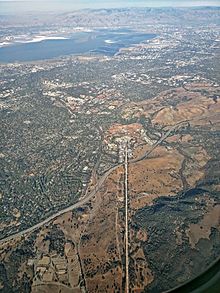
SLAC and its neighborhood, where it stands out as a long straight feature. The main accelerator is 3.2 kilometers long—the longest linear accelerator in the world—and has been operational since 1966.
Owen Chamberlain was born on 10 July, 1920.

References
  1. NobelPrize.org
  2. Wikipedia
Read more at the Science Pole App

Sunday, 8 October 2017

2017 Nobel Prize in Biology or Physiology - The importance of the body's clock

The 2017 Nobel prize for medicine was awarded for the discovery of how our circadian rhythms are controlled. But what light does it shed on the cycle of life?

Tiny ‘clocks’ tick within almost every cell type in our body, and there is growing evidence that decoupling from our natural cycle can have long-term health consequences.

The cycle of day and night on our planet is age-old and inescapable, so the idea of an internal body clock might not sound that radical. In science, though, asking the questions “why?” and “how?” about the most day-to-day occurrences can require the greatest leaps of ingenuity and produce the most interesting answers.

This was the case for three American biologists, Jeffrey Hall, Michael Rosbash and Michael Young, who earlier this week were awarded the Nobel in medicine or physiology, for their discovery of the master genes controlling the body’s circadian rhythms.

The first hints of an internal clock came as early as the 18th century when the French scientist Jean-Jacques d’Ortous de Mairan noticed that plants kept at a steady temperature in a dark cupboard unexpectedly maintained their daily rhythm of opening and closing their leaves. However, De Mairan himself concluded this was because they could “sense the sun without ever seeing it”.
An internal biological clock. The leaves of the mimosa plant open towards the sun during day but close at dusk (upper part). Jean Jacques d'Ortous de Mairan placed the plant in constant darkness (lower part) and found that the leaves continue to follow their normal daily rhythm, even without any fluctuations in daily light.

It was only when Hall, Rosbash and Young used fruit flies to isolate a gene that controls the rhythm of a living organism’s daily life that scientists got the first real glimpse at our time-keeping machinery that explains how plants, animals and humans adapt their biological rhythm so that it is synchronised with the Earth’s revolutions.

Using fruit flies, the team identified a “period” gene, which encodes a protein within the cell during the night which then degrades during the day, in an endless feedback cycle.

Scientists discovered the same gene exists in mammals and that it is expressed in a tiny brain area called the suprachiasmatic nucleus, or SCN. On one side, it is linked to the retina in the eye, and on the other side it connects to the brain’s pineal gland, which pumps out the sleep hormone melatonin.

Modern lifestyles may no longer be constrained by sunrise and sunset, but light remains one of the most powerful influences on our behaviour and wellbeing. This realisation has fuelled a “sleep hygiene” movement, whose proponents point out that bright lights before bedtime and spending the whole day in a dimly lit office can dampen the natural circadian cycle, leaving people in a continual mental twilight – dozy in the morning, and too alert to fall asleep promptly at night.

There is growing evidence that this decoupling from the natural circadian cycle can have long-term health consequences much more far-reaching than tiredness.
At first, it was assumed that the brain’s “master clock” was the body’s only internal timekeeper. In the past decade, though, scientists have shown that clock genes are active in almost every cell type in the body. The activity of blood, liver, kidney and lung cells in a petri dish all rise and fall on a roughly 24-hour cycle. Scientists have also found that the activity of around half our genes appear to be under circadian control, following undulating on-off cycles.
In effect, tiny clocks are ticking inside almost every cell type in our body, anticipating our daily needs. This network of clocks not only maintains order with respect to the outside world, but it keeps things together internally.
Virtually everything in our body, from the secretion of hormones, to the preparation of digestive enzymes in the gut, to changes in blood pressure, are influenced in major ways by knowing what time of day these things will be needed. The most common misconception is that people think that they do not have to follow the rules of biology, and can just eat, drink, sleep, play, or work whenever they want.
The circadian clock anticipates and adapts our physiology to the different phases of the day. Our biological clock helps to regulate sleep patterns, feeding behavior, hormone release, blood pressure, and body temperature.
This discovery explains why jet lag feels so grim: the master clock adapts quickly to changing light levels, but the the rest of your body is far slower to catch up – and does so at different speeds. It also helps explain the extensive range of health risks experienced by shift workers, who are more likely to suffer from heart disease, dementia, diabetes and some cancers.
Obesity is also more common among those with irregular sleep patterns. a team of scientists has found that animals that don’t get enough sleep, but keep their circadian pattern, do not gain weight. But when they are placed on a 20-hour light-dark cycle, they eat more impulsively and develop glucose intolerance.
Evidence is also emerging that our risk of acute illness rises and falls with a predictable regularity. People are 49% more likely to suffer a stroke between 6 am and 12 noon than at any other time of the day and a similar pattern is true for heart attacks. This is linked to a circadian rise in blood pressure in the early morning, which happens even if you’re lying in bed not doing anything.
As a result, it makes sense to take certain blood pressure medications first thing, before getting out of bed. By contrast, cholesterol is made more rapidly by the liver at night. So, statins, which lower cholesterol, work best if taken before going to bed.
As the impact of scientific advance slowly trickles down, the medical profession and society at large are waking up to the power of the biological clock.
A paper last year showing that jet lag impairs baseball performance, prompted some professional sports teams to take on circadian biologists as consultants on schedules for training and travel. The US Navy has altered its shift system to align it with the 24-hour clock, rather than the 18-hour day used in the old British system. Schools are experimenting with later school days, better aligned with the teenage body clock, which runs several hours later than that of adults.
As circadian rhythms have journeyed from obscure corner of science to part of the zeitgeist, companies are launching an increasing number of products on the back of a new anxiety around sleep and natural cycles.