Showing posts with label NASA. Show all posts

Sunday, 5 April 2020

Why doesn't US use the SI system?

In 1970, the Science News reported that Australia is taking its first brisk steps toward conversion to a fully metric system of weights and measures over the next 10 years. The then Prime Minister, John G. Gorton said, "The Government believes that the lasting benefits which will result from this decision will greatly outweigh the ... difficulties involved." At that time, the metric system was used by countries representing 90 percent of the world's population; three-fourths of world trade was carried out in metric measurements.

Five years into Australia's metrication, the US Congress passed the Metric Conversion Act in a bid to move the country away from an imperial system (based on foot and pound). One of the several laws (starting from the times of the Civil War) passed that encourages the voluntary adoption of the metric system. But the voluntary process never took off. Today, only the USA, Liberia, Myanmar and a handful of island nations use versions of the imperial system.

On 30th Sep 1999, NASA reported that it had lost the $125 million Mars Climate Orbiter because the force exerted by the orbiter's thrusters remained in the system of units based on pounds and feet rather than being converted to metric. The problem arose because two teams working on the Mars mission weren't using the same units of measurement.

Scientists at NASA's Jet Propulsion Laboratory in California had assumed that thrust data they received from Lockheed Martin Astronautics in Denver which built the craft, were expressed in metric units, as newtons. Mr. Noel Hinners of Lockheed Martin had noted that "Twenty years ago, we went through this whole hassle of - Should the US go metric? I wish we had."

That wasn't first or the only incident. In 1985, controllers calculated distance in feet rather than nautical miles (both not SI units) and inadvertently pointed a mirror on the space shuttle Discovery away from the Earth instead of towards a laser on Hawaii's Mauna Kea.

Repeatedly failing to properly use the metric system, will the US learn the agony of de-feet?

Compiled by Praveen Kumar S (praveen@mylearningclub.in / rajuspk@gmail.com)

References -
  1. Science News
  2. Wikipedia

Thursday, 31 January 2019

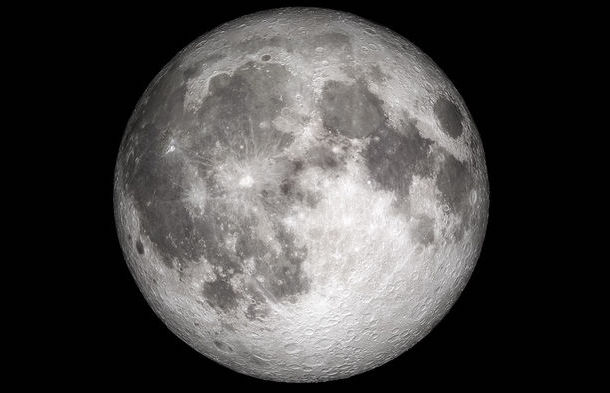
Can moons have moons?

A new study shows that Earth’s moon should, theoretically, be able to have its own moon. Why doesn’t it?

Size comparison of the major moons in our solar system 

Most of the planets in our solar system have orbiting moons, and even some asteroids have their own moons. But do any moons have moons? Is it possible? Could there be so-called submoons?

It’s a simple enough question. If most other objects in the solar system can have moons, why not moons themselves? Researchers decided to try to answer this question of a 4 year old. Their results have now been published in a new peer-reviewed paper in the February 2019 issue of the Monthly Notices of the Royal Astronomical Society.

Planets orbit stars and moons orbit planets, so it is natural to ask if smaller moons could orbit larger ones. So far at least, no submoons have been found orbiting any of the moons considered most likely to support them – Jupiter’s moon Callisto, Saturn’s moons Titan and Iapetus and Earth’s own moon.

The lack of known submoons in our solar system, even orbiting around moons that could theoretically support such objects, can offer us clues about how our own and neighboring planets formed, about which there are still many outstanding questions.

Earth’s moon should theoretically be able to have its own moon. Why doesn’t it?

Researchers found that only large moons on wide orbits from their host planets would be capable of hosting submoons. Usually, any submoons orbiting smaller moons closer to their planet would have their orbits destabilized by tidal forces. Jupiter’s large moon Callisto, Saturn’s large moon Titan, another Saturn moon called Iapetus and Earth’s moon could all theoretically have submoons, so why don’t they?

There may be other sources of submoon instability, such as the non-uniform concentration of mass in Earth’s moon’s crust.

Part of the answer might also have to do with how the primary moons formed in the first place. Earth’s moon is thought to have been born out of a collision between Earth and another body about the size of Mars – and that collision may have helped life on Earth to get started. But some other moons, like those orbiting Jupiter and Saturn, originated from the same cloud of gas and dust that the planets themselves formed from.

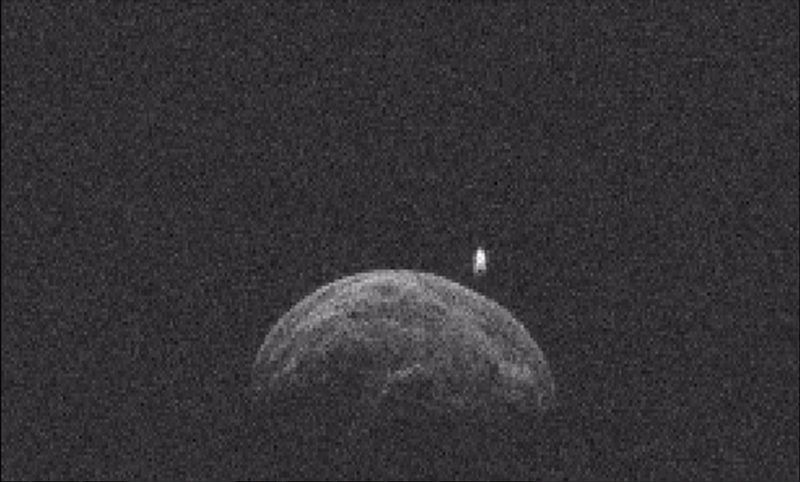
Even asteroids can have moons, such as 2004 BL86. It is about 325 meters in diameter, and its moon is tiny, only 70 meters wide.

It may be that in many or even most cases, there are multiple factors that make the orbits of submoons inherently unstable. Knowing whether that is true or not may have to wait for discoveries of moons orbiting distant exoplanets. Moons themselves are much harder to detect and only one promising candidate has been found so far – a possible exomoon orbiting the Jupiter-sized exoplanet Kepler-1625b. That possible moon – about the size of Neptune – is large enough and far enough from its planet that submoons should be possible as well. Astronomers will need to verify that primary moon first – if it does exist – before looking for any submoons.

Even though Earth’s moon doesn’t have a submoon now, it may in the future, according to the researchers – an artificial one, perhaps NASA’s planned Lunar Gateway. The Lunar Gateway would help to establish humanity’s presence in deep space.

The possibility of moons having their own moons is a fascinating one, even though we haven’t found any examples yet. This new research from Carnegie Science shows that it is indeed possible, but only under the right circumstances.

Download the research paper here.

Adapted from EarthSky.org

Monday, 29 October 2018

Hubble telescope fixed by 'jiggling it around'


The Hubble space telescope is close to resuming full operations after Nasa “jiggled it around”.

The telescope was sidelined earlier this month after a gyroscope failed, leaving it unable to point in the right direction during observations. The device had been expected to fail at some point this year, but the surprise came when a backup did not kick in properly after the initial failure. As a result, Hubble has remained in so-called safe mode and all science observations are on hold.

Gyroscopes are needed to keep Hubble pointing in the right direction as it operates 545km above Earth. Precise pointing is crucial: astronomers use the telescope to peer deep into the cosmos, revealing faraway galaxies, black holes and solar systems. Last week, astronomers said they may have discovered the first moon outside our solar system, with Hubble’s help.

The problem with the backup gyroscope was spotted when detectors in the gyroscope wrongly signalled that the wheel within the device was rotating at a much greater rate than that 19,200 revolutions per minute it should be spinning at.

Nasa expected Hubble to return to normal science operations soon after it performed a “running restart” of the gyroscope on 16 October, which turned the device off for a second. The intention was to clear any faults that may have occurred during a restart on 6 October. That did not seem to work so it was followed up on 18 October with a series of spacecraft manoeuvres – known as turns – in an attempt to clear any blockage around the sealed “float” which contains the spinning wheel in the gyroscope.

At the same time the system was switched between two modes to help with the procedure. Nasa believes that the dodgy rotation speeds could have arisen if the float was off centre in the device. Further jiggling of the telescope and twiddling of switches was performed: the issue now appears to be resolved.

The 28-year-old telescope has had trouble with its gyroscopes before. Shuttle astronauts replaced all six in 2009 during a spacewalk on the final servicing mission. Three of the devices are now considered unusable.

Source - The Guardian

Saturday, 17 March 2018

Kalpana Chawla & Space Shuttle Columbia

March 17, 1962 – birthday of Kalpana Chawla, an Indian American astronaut and the first woman of Indian origin in space. Kalpana Chawla was born in Karnal, Punjab (now in Haryana). Her official date of birth was altered to 1 July 1961 to allow her to join school underage.


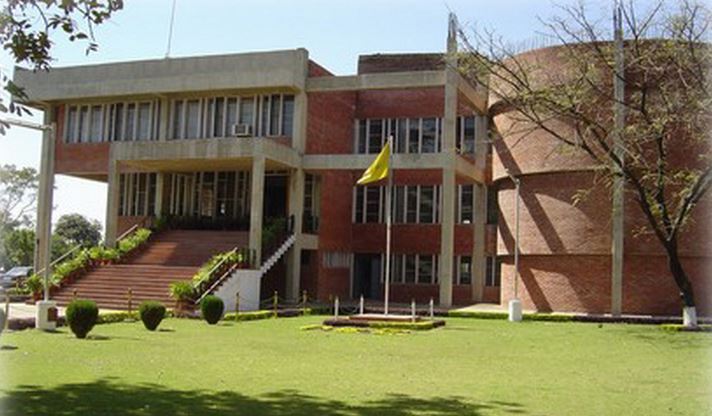
After getting a Bachelor of Science degree in Aeronautical Engineering from Punjab Engineering College, Chandigarh, she moved to USA in 1982 where she obtained the Master of Science degree in Aerospace Engineering from the University of Texas in 1984.

Punjab Engineering College

Chawla went on to earn a second Masters in 1986 and a PhD in aerospace engineering in 1988 from the University of Colorado, Boulder. She held a Certificated Flight Instructor rating for airplanes, gliders and Commercial Pilot licenses for single and multi-engine airplanes, seaplanes and gliders.

Logo of University of Colorado Boulder.

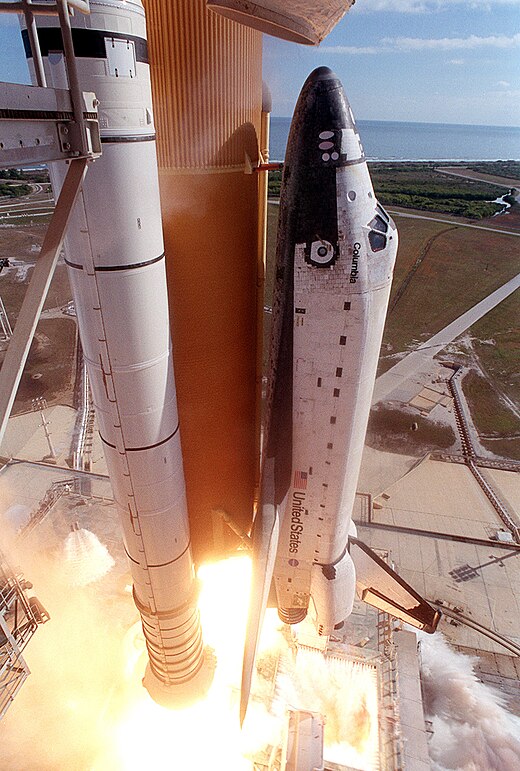
After becoming a naturalized US citizen in April 1991, Chawla applied for the NASA Astronaut Corps. She joined the Corps in March 1995 and was selected for her first flight in 1996. Her first space mission began on November 19, 1997, as part of the crew that flew the Space Shuttle Columbia flight STS-87.

Columbia launches on STS-87

The STS-87 patch is shaped like a space helmet symbolizing the Extravehicular Activity (EVA) on the mission in support of testing of tools for the assembly of the International Space Station (ISS). Earth is shown reflected on the backside of the helmet. The Space Shuttle Columbia forms the interface between the Earth and the heavens, the back and front sides of the helmet in profile. The three red lines emerging from Columbia represent the astronaut symbol as well as the robot arm, which was used to deploy and retrieve the Spartan satellite.

The text 'µg' represents the payloads studying microgravity science in space on this United States Microgravity Payload (USMP-4) mission. Gold flames outlining the helmet visor represent the corona of the Sun, which will be studied by Spartan. The flag of Ukraine is next to the name of the payload specialist who is the first person from that nation to fly on the Space Shuttle.

Chawla was the first Indian-born woman and the second Indian person to fly in space, following cosmonaut Rakesh Sharma who flew in 1984 on the Soyuz T-11.
 
In 2000, Chawla was selected for her second flight as part of the crew of STS-107. This mission was repeatedly delayed due to scheduling conflicts and technical problems such as the discovery of cracks in the shuttle engine flow liners. On January 16, 2003, Chawla finally returned to space aboard Space Shuttle Columbia on the ill-fated STS-107 mission. Chawla's responsibilities included the microgravity experiments, for which the crew conducted nearly 80 experiments studying earth and space science, advanced technology development, and astronaut health and safety.

Space Shuttle Columbia lifts off from Launch Pad 39A on mission STS-107. Launch occurred on 16th January, 2003

Insignia for STS-107 - a multi-discipline microgravity and Earth science research mission with a multitude of international scientific investigations conducted continuously during the planned 16 days on orbit. The central element of the patch is the microgravity symbol, µg, flowing into the rays of the astronaut symbol.
The mission inclination is portrayed by the 39 degree angle of the astronaut symbol to the Earth's horizon. The sunrise is representative of the numerous experiments that are the dawn of a new era for continued microgravity research on the International Space Station and beyond. The breadth of science conducted on this mission will have widespread benefits to life on Earth and our continued exploration of space illustrated by the Earth and stars.
The constellation Columbia (the dove) was chosen to symbolize peace on Earth and the Space Shuttle Columbia. The seven stars also represent the mission crew members and honor the original astronauts who paved the way to make research in space possible. The Israeli flag is adjacent to the name of the payload specialist who is the first person from that country to fly on the Space Shuttle.

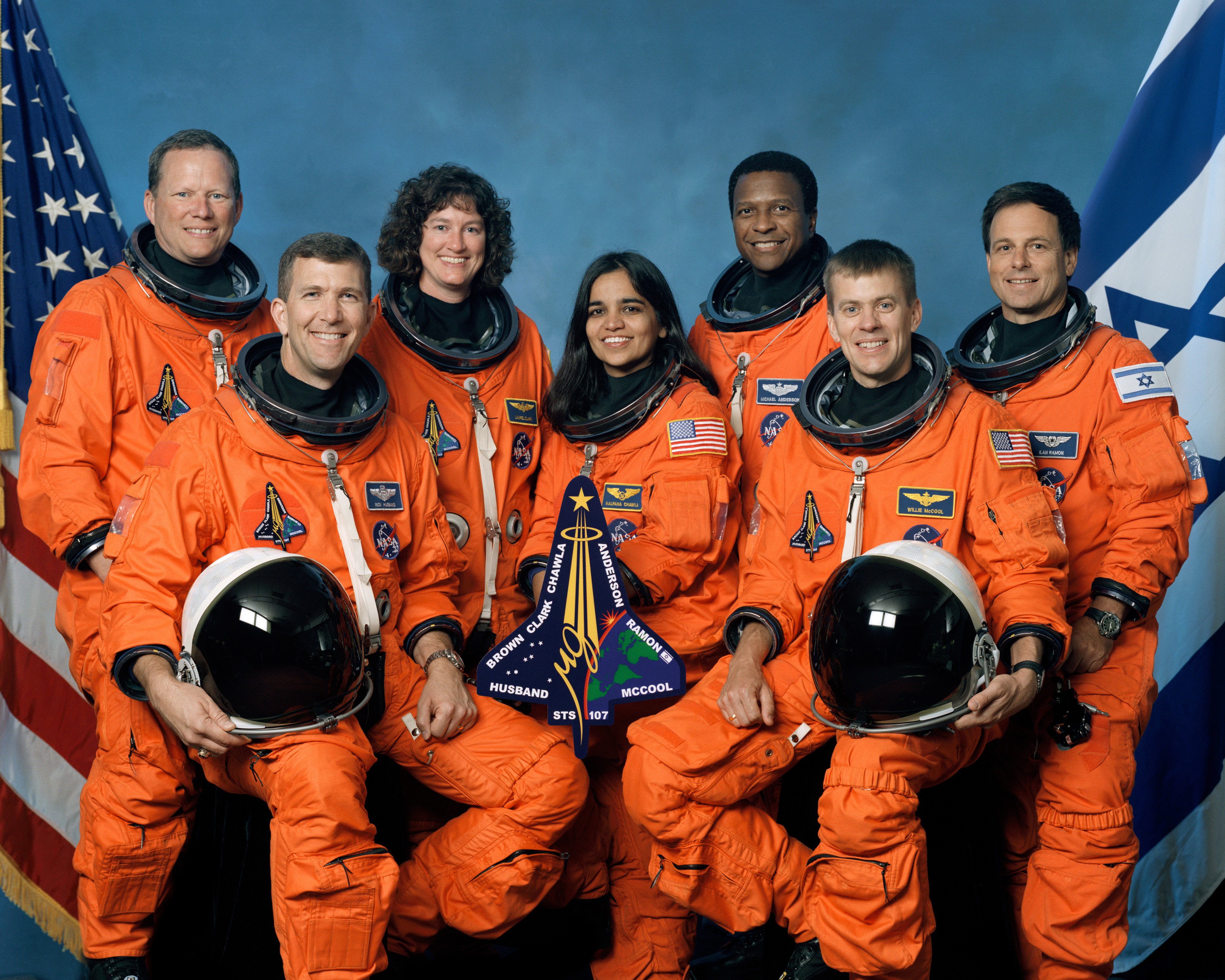
The crew of the Space Shuttle Columbia, mission STS-107. From left to right are mission specialist David Brown, commander Rick Husband, mission specialist Laurel Clark, mission specialist Kalpana Chawla, mission specialist Michael Anderson, pilot William McCool, and Israeli payload specialist Ilan Ramon.

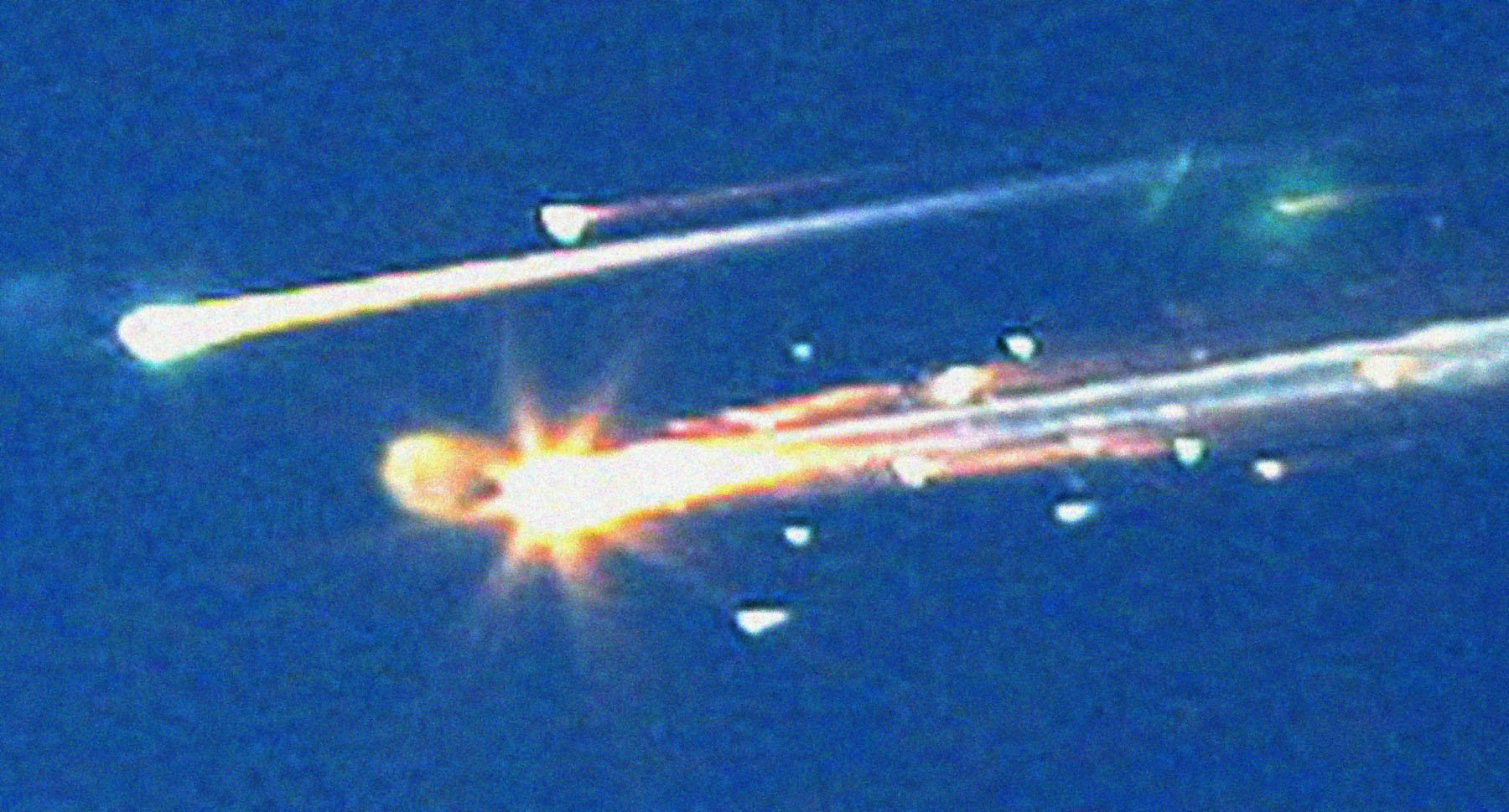
During the launch of STS-107, Columbia's 28th mission, a piece of foam insulation broke off from the Space Shuttle external tank and struck the left wing of the orbiter. It was suspected that the damage to Columbia was more serious than in the previous shuttle launches but the investigation was limited with the reasoning that the crew could not have fixed the problem if it had been confirmed. When Columbia re-entered the atmosphere of Earth, the damage allowed hot atmospheric gases to penetrate and destroy the internal wing structure, which caused the spacecraft to become unstable and slowly break apart.


One of the Space Shuttle Columbia's Main Engine powerheads found on the ground

The Final Report of the Columbia Accident Investigation - download the info-graphic here
You can download the above files using the following the hyperlinks -

Saturday, 10 March 2018

Send your name to the sun


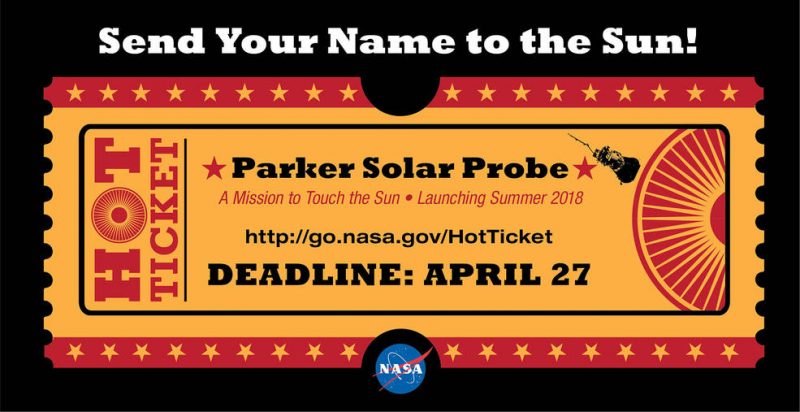
NASA’s Parker Solar Probe mission – scheduled to launch in summer 2018 – will travel through the sun’s atmosphere and get closer to the solar surface than any spacecraft before it. You can send your name along for the ride.

To commemorate humanity’s first visit to our own star, NASA is inviting people around the world to submit their names online to be placed on a microchip aboard the Parker Solar Probe. Submissions will be accepted until April 27, 2018. Learn more and add your name to the mission here. Link to register your name

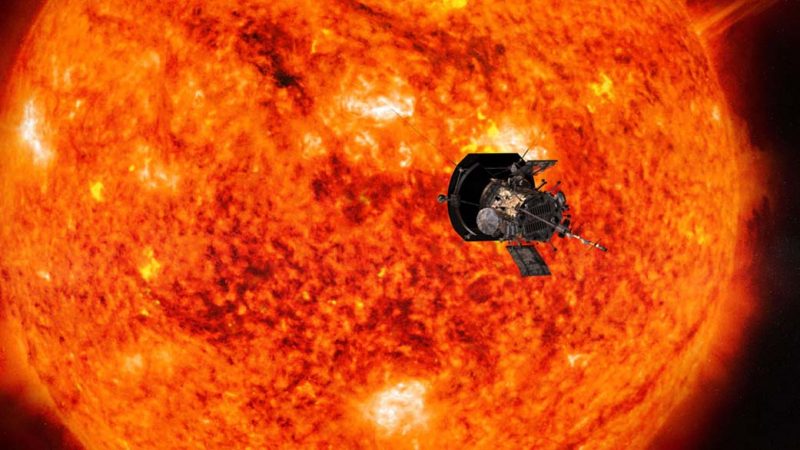
Illustration of the Parker Solar Probe spacecraft approaching the sun

The spacecraft, about the size of a small car, will travel directly into the sun’s atmosphere about 4 million miles (6.4 million km) from its surface. The primary science goals for the mission, said NASA, are to trace how energy and heat move through the solar corona and to explore what accelerates the solar wind as well as solar energetic particles.

The spacecraft speed is so fast, at its closest approach it will be going at approximately 430,000 miles (692,000 km) per hour. That’s fast enough to get from Washington, D.C., to Tokyo in under a minute.

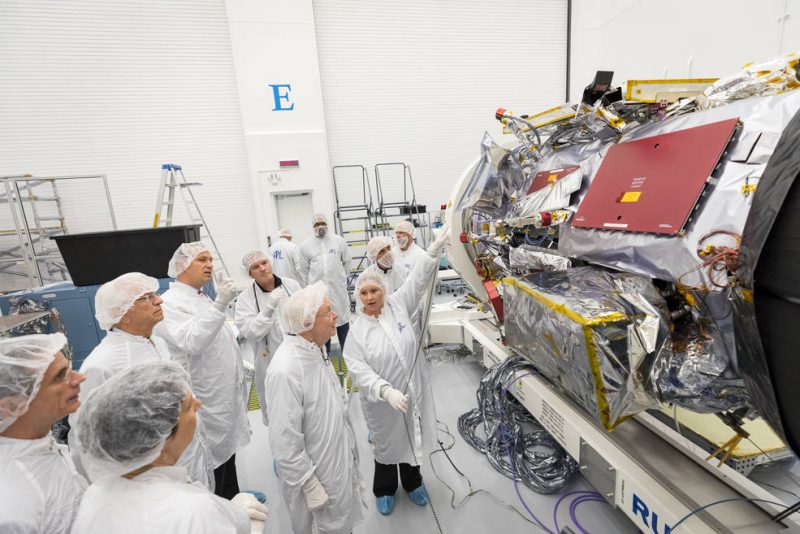
NASA named the spacecraft the Parker Solar Probe in honor of astrophysicist Eugene Parker. This was the first time NASA named a spacecraft for a living individual. In this photo, Eugene Parker, professor emeritus at the University of Chicago, visits the spacecraft that bears his name on October 3, 2017. Engineers in the clean room at the Johns Hopkins Applied Physics Laboratory in Laurel, Maryland, where the probe was designed and built, point out the instruments that will collect data as the mission travels directly through the sun’s atmosphere.

To perform its investigations, the spacecraft and instruments will be protected from the sun’s heat by a 4.5-inch-thick (11.4 cm) carbon-composite shield, which will need to withstand temperatures outside the spacecraft that reach nearly 2,500 degrees Fahrenheit (1,371 degrees C). This heat shield will keep the four instrument suites designed to study magnetic fields, plasma and energetic particles, and image the solar wind, at room temperature.

Send your name to the sun, via a microchip installed on NASA’s upcoming Parker Solar Probe mission. Submissions will be accepted until April 27, 2018.


Sources -
  1. NASA
  2. EarthSky.org