Thursday, 6 December 2018

Helmholtz & his revolutionary Ophthalmoscope

Dec. 6, 1850 - Hermann von Helmholtz demonstrated his revolutionary ophthalmoscope to the Berlin Physical Society.


Ophthalmoscopy, also called funduscopy, is a test that allows a health professional to see inside the fundus of the eye and other structures using an ophthalmoscope (or funduscope). It is done as part of an eye examination and may be done as part of a routine physical examination. It is crucial in determining the health of the retina, optic disc, and vitreous humor.


History
Although some credit the invention of the ophthalmoscope to Charles Babbage in 1847, it was not until it was independently reinvented by Hermann von Helmholtz that its usefulness was recognized - it was to revolutionize ophthalmology.
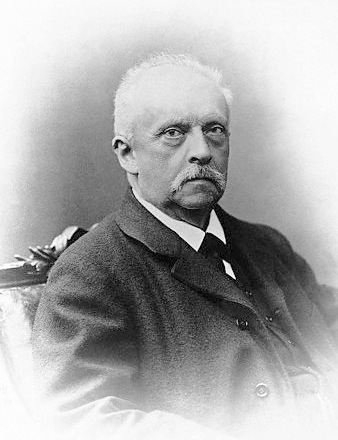
Hermann von Helmholtz

While training in France, Andreas Anagnostakis, an ophthalmologist from Greece, came up with the idea of making the instrument hand-held by adding a concave mirror. Austin Barnett created a model for Anagnostakis, which he used in his practice and subsequently when presented at the first Ophthalmological Conference in Brussels in 1857, the instrument became very popular among ophthalmologists.

In 1915, Francis A. Welch and William Noah Allyn invented the world's first hand-held direct illuminating ophthalmoscope, precursor to the device now used by clinicians around the world. This refinement and updating of von Helmholtz's invention enabled ophthalmoscopy to become one of the most ubiquitous medical screening techniques in the world today. The company Welch Allyn started as a result of this invention.


Medical Use
Ophthalmoscopy is done as part of a routine physical or complete eye examination. It is used to detect and evaluate symptoms of various retinal vascular diseases or eye diseases such as glaucoma.

In patients with headaches, the finding of swollen optic discs, or papilledema, on ophthalmoscopy is a key sign, as this indicates raised intracranial pressure (ICP) which could be due to hydrocephalus, benign intracranial hypertension or brain tumor, amongst other conditions. Cupped optic discs are seen in glaucoma.

In patients with diabetes mellitus, regular ophthalmoscopic eye examinations are important to screen for diabetic retinopathy as visual loss due to diabetes can be prevented by retinal laser treatment if retinopathy is spotted early.

In arterial hypertension, hypertensive changes of the retina closely mimic those in the brain, and may predict cerebrovascular accidents (strokes).

Etymology

The word ophthalmoscopy uses combining forms of ophthalmo- + -scopy, yielding "viewing the eye". The word funduscopy derives from fundus + -scopy, yielding "viewing the far inside".

Scientists have successfully created a fifth state of matter in space

In 1995, researchers were able to prove that a fifth state of matter — the Bose-Einstein condensate — could be created at very low temperatures. Until recently, this state of aggregation could only be generated using high-vacuum apparatus on Earth and was the state was extremely short-lived due to gravity. However, a German research team has now succeeded in generating and studying the Bose-Einstein condensate using an unmanned space rocket.

In addition to the standard aggregate states of solid, liquid, and gas, matter can also have other states. A gas, for example, can be ionised at high temperatures to form a plasma.
In 1995, researchers were able to prove that a fifth state of matter could be created at very low temperatures — the Bose-Einstein condensate.

In quantum mechanics, the Bose-Einstein condensate is used to conduct quantum experiments. For example, it can be used to study gravitational waves or the Earth's gravitational field. Until now, however, this special state of aggregation could only be generated using high-vacuum apparatus on Earth and the state was extremely short-lived due to gravity. A German research team has now succeeded for the first time in generating and studying the Bose-Einstein condensate on board an unmanned space rocket. The duration of experiments is limited by gravity.


The formation of such a condensate at extremely low temperatures was first predicted by the two physicists Satyendranath Bose and Albert Einstein. Researchers detected the Bose-Einstein condensate after cooling atoms to a temperature only one millionth of a degree above absolute zero (0 Kelvin).


As the atoms are cooled, the movement of atoms decreases and, at the same time, the wavelength of the particles increases. Near absolute zero, an almost complete standstill is reached and the wave functions (each particle is described in quantum mechanics with its own wave function) of the individual particles overlap. In this state, all atoms in the system have the same physical properties — they behave like a single atom or a superatom.

Although experiments with Bose-Einstein condensates are extremely useful, they have so far proved difficult to carry out: due to the gravitational forces acting on the atoms in the condensate cloud, they fall down in a very short time and experiments can't continue.

In order to be able to study the cold condensate cloud for longer, researchers therefore use very high drop towers. In this way, the duration of the experiments can be extended.

But even very tall drop towers such as the 122-metre tower in Bremen, you can only achieve free-fall in weightlessness for a few seconds — or as we call it, microgravity," explained Maike Lachmann from the University of Hanover in World of Physics. "In space, on the other hand, much longer and more precise measurements can be made".

In order to conduct experiments with Bose-Einstein condensates in space, researchers developed a chip made of rubidium atoms and, in January 2017, transported it aboard space rocket MAIUS-1 from Esrange Space Center.

Once in space, the temperature of the atoms was reduced by laser and evaporative cooling until the condensate formed. The researchers were then able to investigate how the atomic gas behaved when manipulated in different ways. During its boost phase and six-minute space flight, 110 experiments were performed.

In 2020 and 2021, further experiments will be carried out, including experiments with potassium atoms. Researchers from the German Aerospace Center (DLR) and NASA will use the findings of the German researchers in future for their own research on cold quantum gases aboard the ISS.

Source - Business Insider Deutschland